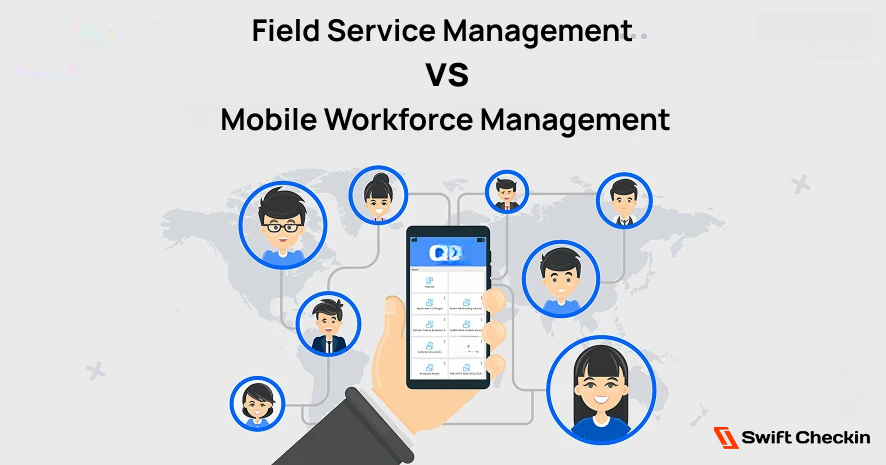
Choosing the right system to manage your teams in the field can transform your business. Both Field Service Management (FSM) and Mobile Workforce Management (MWM) help you boost productivity, cut costs, and deliver better service. But they’re built for different needs. Here’s how to decide what fits your operation best.
FSM is all about managing on-site service work. Think of technicians fixing equipment, maintaining systems, or handling repairs at customer locations. FSM software gives you tools for:
FSM focuses on making sure service jobs happen on time, with the right parts and people. It’s designed for service-based businesses that want to improve efficiency and keep customers happy.
MWM takes a broader approach. It’s built to manage all kinds of mobile employees-not just service techs, but also sales reps, delivery drivers, and remote teams. MWM software helps you:
MWM is ideal if your business has a mix of mobile roles and wants to keep everyone connected, productive, and accountable-no matter where they are.
FSM is service-centric. MWM is broader, covering your entire mobile workforce.
Many businesses use both systems together for complete visibility and control.
Companies using FSM report faster job completion, higher first-time fix rates, and improved customer satisfaction. Businesses with MWM see better workforce utilization, reduced travel time, and real-time insights that help them adapt quickly. In a recent survey, 74% of mobile workers said customer expectations are higher than ever-making the right management tools more important than ever.
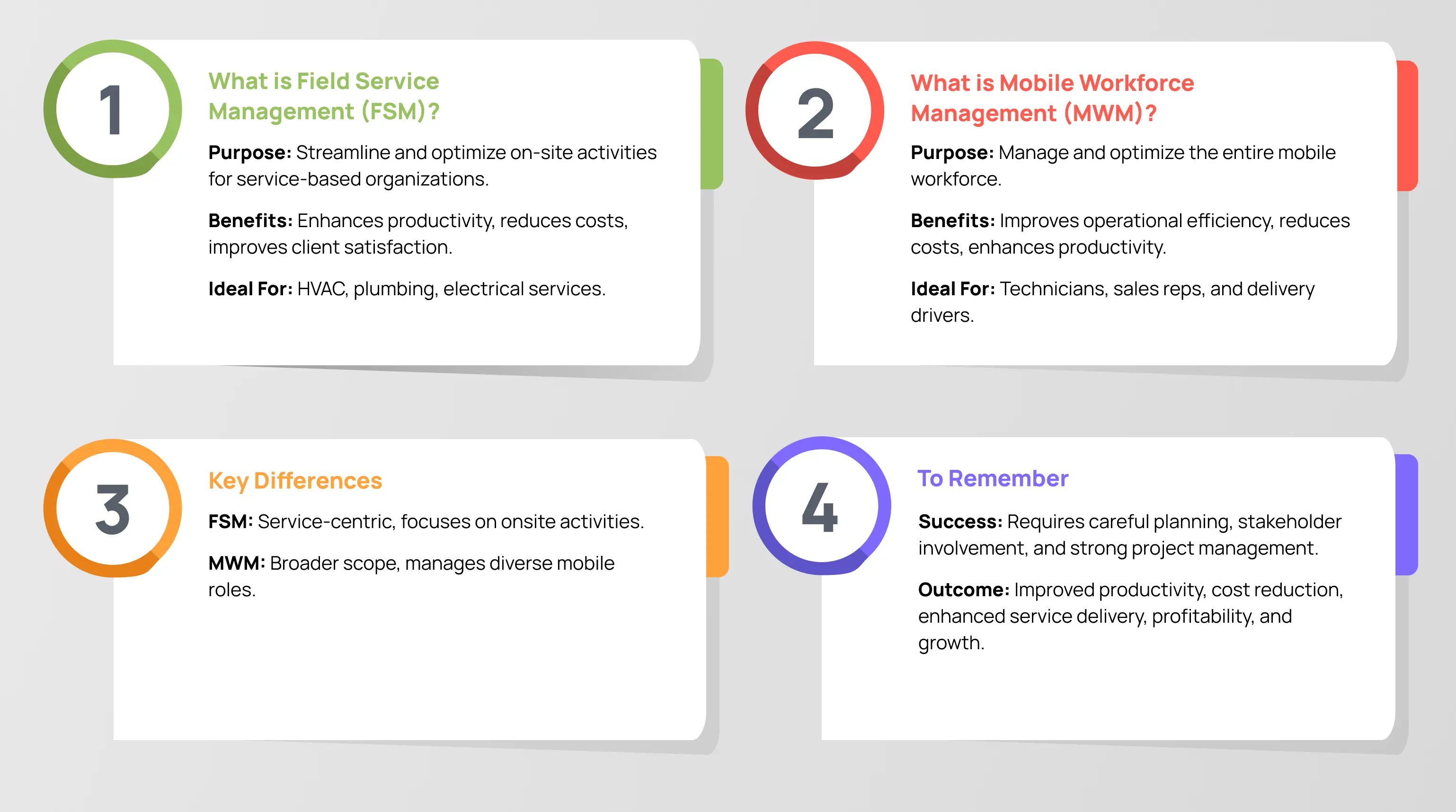
FSM and MWM both help you run a smarter, more efficient field operation. FSM is the go-to for service-focused businesses. MWM is the choice for managing a wider range of mobile teams. The right fit depends on your business goals and the mix of roles you need to manage. With the right system in place, you’ll deliver better service, reduce costs, and keep your teams performing at their best.
What is the main difference between FSM and MWM?
FSM is service-centric, while MWM is broader, managing diverse mobile roles.
Can a business use both FSM and MWM?
When your firm is a service-based business, e.g., HVAC, electrical, or appliance repair, Field Service Management (FSM) software can be a perfect solution. With scheduling, dispatching and job tracking as well as field service analytics you can optimize on-site service activities. In case of broader workforce management needs such as delivery services or sales teams, Mobile Workforce Management (MWM) would be more suitable.
How do FSM and MWM impact customer satisfaction?
Through the streamlining of operations and improving of service delivery,both FSM and MWM significantly improve customer satisfaction. This ensures timely and effective provision of services in field operations with features like scheduling, dispatching and job tracking. Thus, the response time is shortened and becomes efficient while quality improves. Meanwhile,MWM handles the entire mobile workforce that includes delivery teams such salespersons through route optimization for performance tracking hence ensuring efficiency as well as dependability.
What are the costs associated with implementing FSM or MWM?
The costs for implementing either FSM or MWM include software licensing fees, set up/customization charges; training expenses for staff; as well as maintenance/technical support fees over time. There might also be some hardware costs including mobile devices along with any possible integration with existing systems. These prices may vary depending on who’s providing them and the size of the company.
How long does it take to implement FSM or MWM solutions?
The period of implementing FSM or MWM solutions depends on the complexity of the system under consideration as well as size of the company where it ranges from a few weeks to several months or more. This includes software installation, customization, staff training, data migration and integration with other systems in place.
